
The Shipper’s Guide to Choosing Reliable Cross-Border Freight Partners in North America
Selecting a freight carrier for cross-border shipments between the United States and Mexico involves significantly more complexity than choosing domestic transportation. You’re not just evaluating whether a carrier can move freight from point A to point B.
You’re assessing their ability to navigate customs regulations in two countries, handle documentation accurately, maintain equipment compliance across different jurisdictions, and communicate effectively throughout processes that involve multiple handoffs and potential complications.
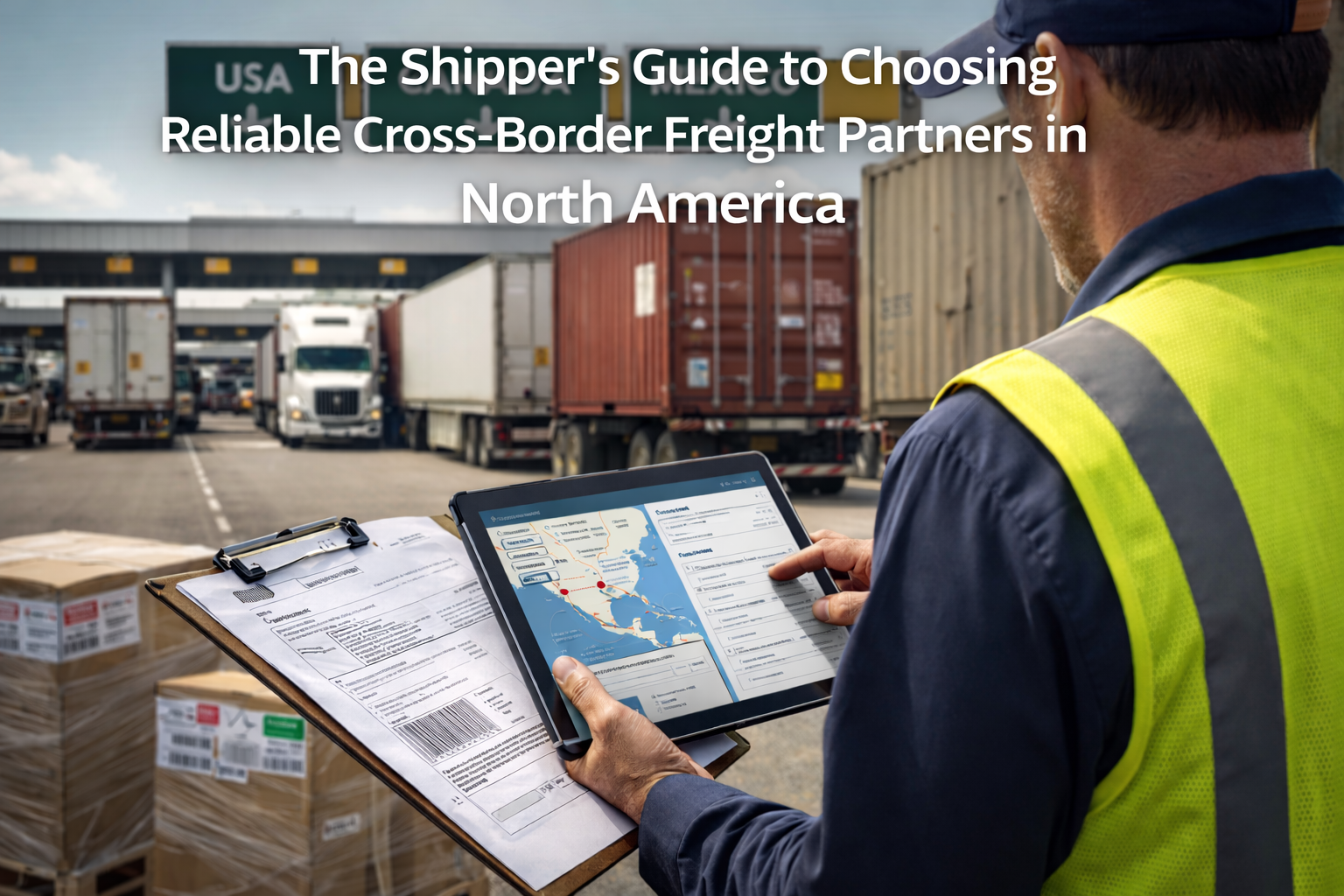
The wrong carrier choice leads to delayed shipments, damaged relationships with your customers, unexpected fees, customs complications, and the constant stress of wondering whether your freight will actually arrive when promised.
The right carrier becomes a strategic partner who simplifies your cross-border logistics, provides reliable capacity when you need it, and contributes to your business success rather than creating additional problems.
Yet many shippers struggle to evaluate carriers effectively. They focus primarily on price, choosing the cheapest option without thoroughly assessing operational capabilities, reliability, or the hidden costs associated with poor service.
Or they stick with the same carrier indefinitely based on inertia rather than periodically evaluating whether that relationship still serves their needs optimally.
Understanding what distinguishes professional, reliable cross-border carriers from operations cutting corners helps you make informed decisions that protect your business and serve your customers well.
Let’s examine exactly what to look for, what questions to ask, and how to evaluate potential freight partners systematically rather than relying on price alone or vague impressions.
Understanding Cross-Border Freight Complexity
Before evaluating specific carriers, it’s worth understanding why cross-border freight between the US and Mexico presents unique challenges that not all carriers handle competently.
This complexity explains why choosing experienced, professional carriers matters more for international shipments than for domestic freight.
Different regulatory environments create additional challenges. Equipment that’s legal and compliant in the US might not meet Mexican requirements and vice versa. Professional cross-border carriers maintain equipment that complies with regulations in both countries, preventing border delays due to equipment issues.
They understand weight limits, safety requirements, and documentation needs in both jurisdictions.
Communication across language and time zones requires systems and staff capable of coordinating effectively. Your shipment might be handled by dispatchers in Texas, drivers in Mexico, and customs brokers in border cities.
Carriers with truly integrated cross-border operations have communication systems that function smoothly across these different contexts rather than creating confusion and miscommunication.
Security concerns are elevated for cross-border freight. Cargo theft, particularly in certain regions of Mexico, represents a real risk that professional carriers mitigate through secure facilities, GPS tracking, vetted driver networks, and established security protocols.
Understanding how carriers protect freight in transit should factor into your evaluation.
The complexity of cross-border logistics means the gap between professional carriers and marginal operators is wider than in domestic freight. A subpar domestic carrier might deliver late or communicate poorly, but still get freight to the destination eventually.
A subpar cross-border carrier can have shipments stuck at customs for days, encounter regulatory issues that prevent crossing entirely, or lose freight to theft in insecure conditions.
Evaluating Operational Capabilities and Infrastructure
When assessing potential freight partners, moving beyond price quotes to evaluate actual operational capabilities reveals which carriers have the infrastructure and systems to deliver reliable service versus those operating on shoestring budgets that compromise quality.
Equipment quality and maintenance practices significantly impact reliability. Carriers operating well-maintained fleets of modern trucks and trailers experience fewer breakdowns and delays than those running older, poorly maintained equipment. While you can’t inspect equipment directly before choosing a carrier, you can ask about fleet age, maintenance schedules, and what happens when equipment fails during transit.
Dedicated facilities for equipment storage and maintenance indicate operational seriousness. Carriers with secure yards, regular inspection protocols, and dedicated maintenance staff, like RT Transport’s 24/7 surveilled logistics facility,y demonstrate investment in operational excellence that benefits you through more reliable service.
GPS tracking and customer visibility systems should be standard for any carrier you consider. The ability to check shipment status anytime, receive automated notifications at key milestones, and access detailed tracking history isn’t a luxury anymore; it’s a baseline expectation. Carriers without these capabilities operate at a competitive disadvantage that will frustrate you throughout the relationship.
For cross-border operations specifically, ask about their customs clearance processes and relationships with customs brokers. Experienced carriers have established procedures, preferred broker partnerships, and track records of smooth customs transitions.
Newer or less sophisticated carriers might use whoever’s cheapest or lack systematic approaches to customs documentation.
This verification can include checking how their automated notifications function. If you’re evaluating a carrier that promises automated pickup confirmations, border crossing alerts, and delivery notifications, actually test these systems with a trial shipment sent to a Disposable mail service.
This reveals whether communications arrive on time, contain useful information, and work reliably across different scenarios.
Researching Carrier Reputation and Reliability
Beyond evaluating what carriers claim about themselves, researching their actual reputation and track record reveals how they perform in practice. This research prevents unpleasant surprises after you’ve committed to a carrier relationship.
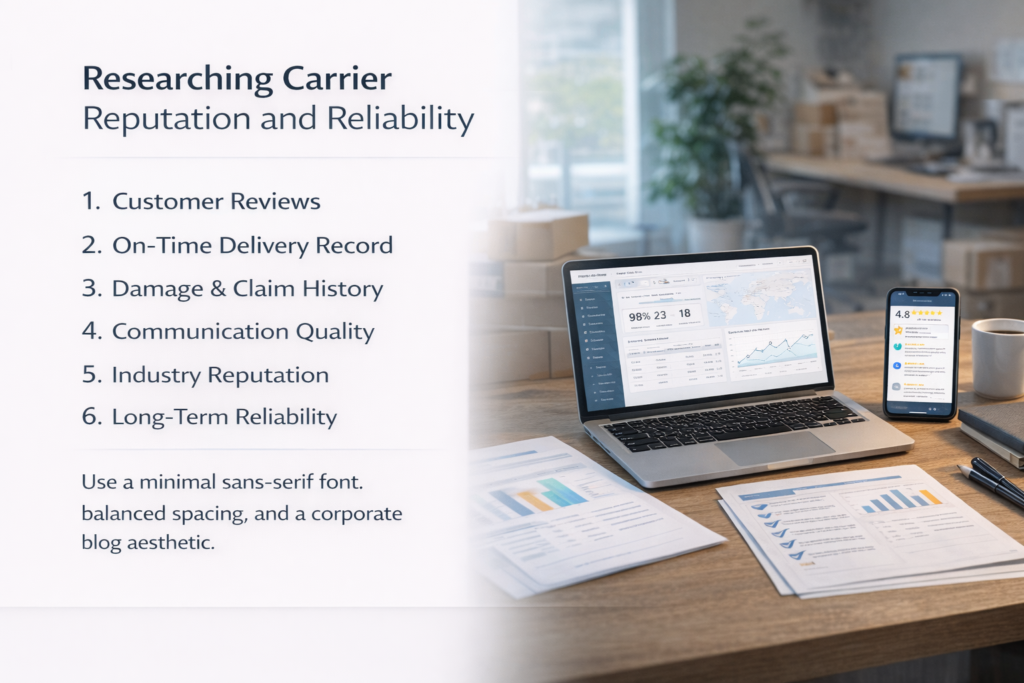
Customer reviews and testimonials provide insights from shippers who’ve actually used the carrier. Search for the carrier name online and review what appears. Google reviews, industry forums, and social media discussions can reveal patterns of problems or consistent positive experiences. Be somewhat skeptical of overly perfect reviews that might be manufactured, but pay attention to detailed feedback that describes specific experiences.
Industry reputation among other logistics professionals offers another perspective. If you have relationships with freight brokers, customs brokers, or other shippers in your industry, ask whether they’ve heard of the carrier and what impressions they have. Carriers with strong reputations in the industry tend to deliver quality service consistently.
Understanding the competitive landscape helps you evaluate whether a specific carrier offers good value relative to alternatives. The cross-border freight industry includes hundreds of carriers operating between the US and Mexico, ranging from large national operations to regional specialists to small independent operators. Knowing what options exist prevents you from settling for subpar service because you’re unaware of better alternatives.
When evaluating freight partners, it’s worth knowing what other companies operate in similar spaces, offer comparable services, or compete for the same business. This broader market awareness ensures you’re making informed comparisons rather than choosing from a limited set of options you happened to find first.
Financial stability matters for ongoing carrier relationships. Carriers experiencing financial difficulties might cut corners on maintenance, let insurance lapse, or disappear entirely, leaving you scrambling for alternatives. While you can’t access detailed financials for private carriers, signs of financial stress include constantly changing contact information, outdated equipment, or frequent requests to change payment terms.
Evaluating Communication and Customer Service
Once shipments are in transit, your primary interaction with carriers happens through communication. Responsive, clear, proactive communication distinguishes professional carriers from those who view customer service as an afterthought.
Initial responsiveness during the quote and onboarding process predicts ongoing communication quality. If a carrier is slow to return calls, vague in answering questions, or difficult to reach during the sales process when they’re trying to win your business, expect worse communication once they’ve secured it.
Carriers who respond promptly, answer questions thoroughly, and make themselves accessible during early interactions typically maintain that standard throughout the relationship.
Transparency about capabilities, pricing, and limitations builds trust more than overselling. Professional carriers are honest about what they can and can’t do, explain pricing clearly, and set realistic expectations about transit times and potential complications. Carriers who promise everything you want to hear often disappoint when reality doesn’t match inflated claims.
Proactive communication when problems occur separates good carriers from poor ones. Issues happen in freight transportation – weather delays, equipment breakdowns, customs complications, and traffic accidents.
What matters is whether carriers notify you immediately when problems arise, explain what’s happening, provide realistic updated delivery estimates, and take ownership of finding solutions. Carriers who go silent during problems or make excuses rather than solving issues create far more stress than those who communicate transparently.
For cross-border operations, carriers should proactively help with documentation requirements, customs questions, and regulatory compliance rather than expecting you to navigate these complexities alone. Their expertise in international logistics should add value by simplifying processes you find complicated, rather than just transporting freight with minimal support.
Understanding Pricing and Contract Terms
Price obviously matters when selecting carriers, but understanding the complete cost picture and contract terms prevents surprises and helps you evaluate true value rather than just initial quotes.
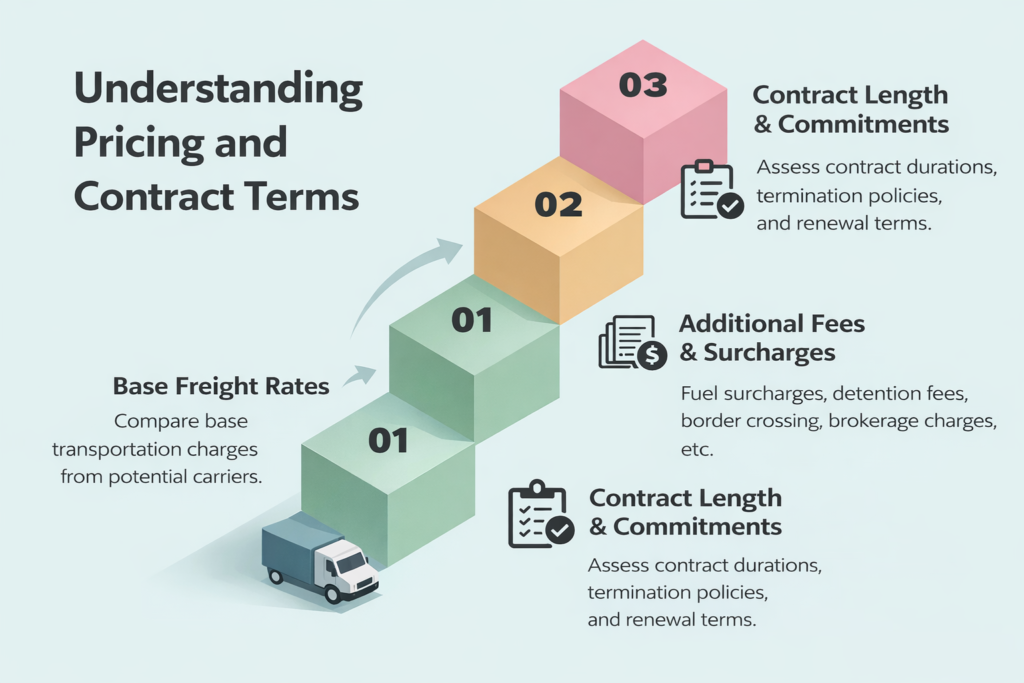
Base freight rates are only part of total costs. Fuel surcharges, border crossing fees, customs brokerage charges, detention fees, accessorial charges for special handling, and other potential fees can significantly increase final costs. Request detailed breakdowns showing all potential charges rather than just base rates, and ask for examples of total costs for typical shipments.
Pricing transparency builds trust and helps you budget accurately. Carriers with complex pricing structures full of potential fees create budgeting challenges and surprise costs. Simpler, more transparent pricing that clearly explains what’s included and what costs extra makes relationships easier to manage.
Volume commitments and contract terms should align with your actual shipping needs. Some carriers offer better pricing in exchange for minimum volume commitments. Make sure you can realistically meet these minimums before committing. Understand cancellation terms, notice periods for rate changes, and what happens if your shipping volumes decrease.
Insurance coverage and liability limits should be clearly defined. Understand what protection you have if freight is damaged or lost, what the carrier’s liability limits are, what documentation is required for claims, and whether additional insurance makes sense for high-value shipments. Don’t assume standard industry coverage automatically applies without verifying specifics.
Making the Decision and Building the Relationship
After evaluating carriers across all these dimensions, you need to actually make a decision and begin working together. How you start the relationship affects whether it develops productively or struggles from the beginning.
Start with a trial period rather than immediately shifting all freight to a new carrier. Send a few shipments to evaluate how they perform in practice, whether communication matches promises, if pricing remains competitive after initial quotes, and how they handle both routine shipments and any problems that arise. This trial approach minimizes risk while gathering real-world data about carrier performance.
Monitor performance systematically rather than just reacting to individual problems. Track on-time delivery percentages, damage rates, communication responsiveness, and overall satisfaction. This data helps you evaluate whether the relationship provides the value you expected and informs decisions about whether to expand, maintain, or reduce freight volume with the carrier.
Maintain relationships with multiple carriers rather than relying entirely on one option. Having backup capacity protects you when your primary carrier has capacity constraints, experiences service problems, or changes their operations in ways that no longer fit your needs. Most shippers benefit from working with 2-3 carriers, balancing concentration that builds strong relationships with diversification that provides flexibility.
Provide feedback to carriers about both problems and successes. When they perform well, let them know you appreciate quality service. When problems occur, communicate clearly about what went wrong and what you expect for resolution. This feedback helps carriers understand your priorities and improve service over time.
Your Path to Reliable Cross-Border Freight
Choosing freight carriers for cross-border shipments requires more thorough evaluation than domestic transportation because the stakes are higher and the complexity is greater. Taking time to assess operational capabilities, research reputations, evaluate communication quality, understand complete pricing, and test actual performance prevents costly mistakes and builds partnerships that contribute to your business success.
Don’t default to the cheapest option without understanding what you’re sacrificing in reliability, communication, or operational capability. The cost savings from low-price carriers often evaporate through delayed shipments, damaged freight, customs complications, and the time you spend managing problems rather than focusing on your actual business.
Look for carriers who demonstrate professional operations through modern equipment, established infrastructure, clear communication systems, and proven track records in cross-border logistics.
Companies like RT Transport that invest in GPS tracking, customized customer platforms, secure equipment facilities, and comprehensive service delivery represent the standard you should expect from cross-border freight partners.
Your freight transportation is too important to leave to chance or choose based primarily on price. Evaluate carriers thoroughly, start relationships carefully, and build partnerships with carriers who prove themselves through consistent performance and professional operations.
That’s how you create logistics solutions that serve your business well for years rather than constantly dealing with carrier problems that distract from your core operations.